Datasheet4U Logo Datasheet4U.com

NR121E - 3A 18V Buck Regulator

Download the NR121E datasheet PDF. This datasheet also covers the NR120E variant, as both devices belong to the same 3a 18v buck regulator family and are provided as variant models within a single manufacturer datasheet.

Description

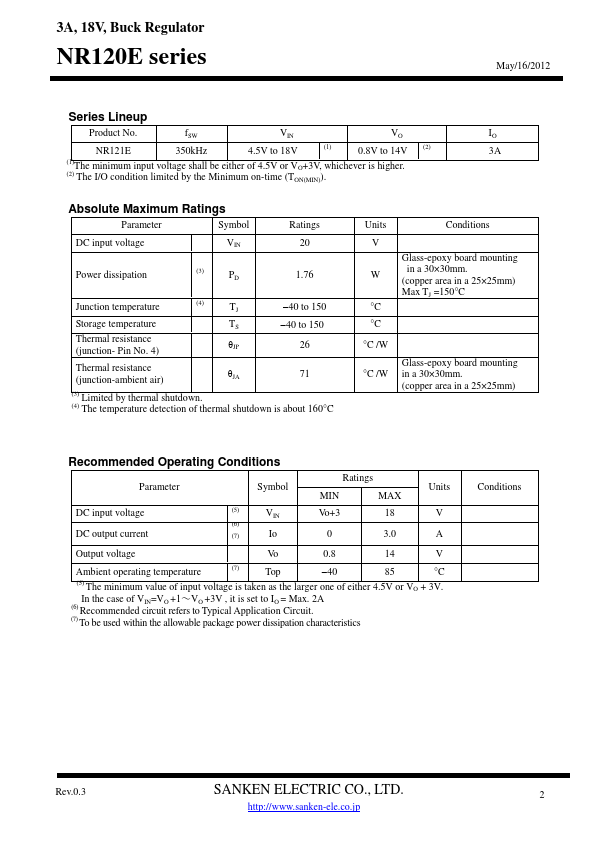
The NR120E series is buck regulator ICs integrates High-side power MOSFET.

With the current mode control, ultra low ESR capacitors such as ceramic capacitors can be used.

Features

  • & Benefits.
  • Current mode PWM control.
  • Up to 94% efficiency.
  • Stable with low ESR ceramic output capacitors.
  • Built-in protection function Over Current Protection (OCP) Thermal Shutdown (TSD) Under Voltage Lockout (UVLO).
  • Built-in phase compensation.
  • Adjustable Soft-Start with an external capacitor.
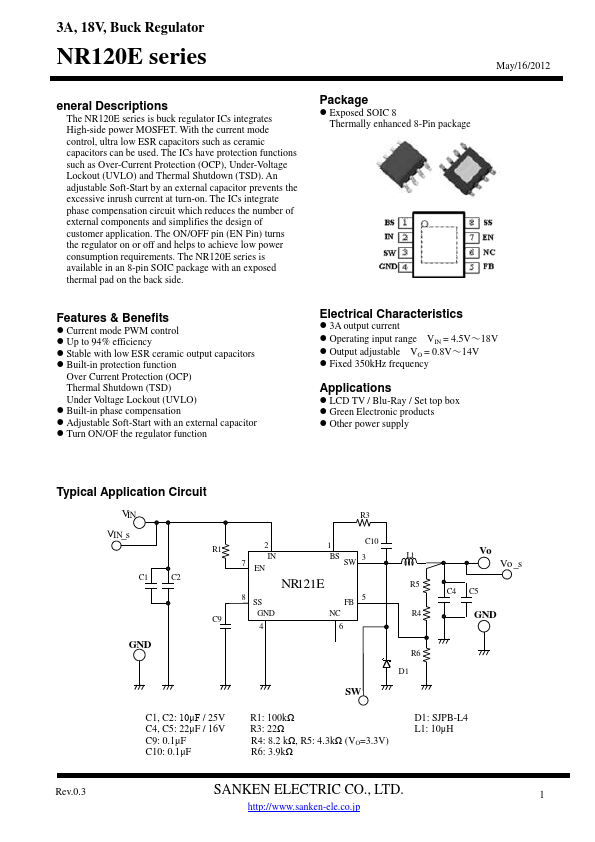
  • Turn ON/OF the regulator function Electrical Characteristics.
  • 3A output current.
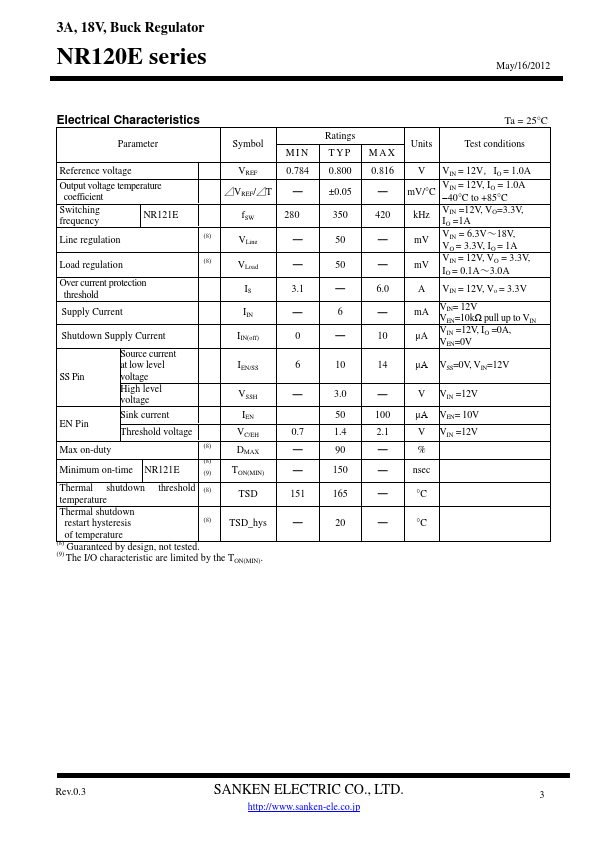
  • Operating input range VIN = 4.5V~18V.
  • Output adjustable VO = 0.8V~14V.

📥 Download Datasheet

Note: The manufacturer provides a single datasheet file (NR120E-SANKEN.pdf) that lists specifications for multiple related part numbers.

Datasheet Details

Part number NR121E
Manufacturer Sanken
File Size 643.58 KB
Description 3A 18V Buck Regulator
Datasheet download datasheet NR121E Datasheet

Full PDF Text Transcription

Click to expand full text
3A, 18V, Buck Regulator NR120E series eneral Descriptions The NR120E series is buck regulator ICs integrates High-side power MOSFET. With the current mode control, ultra low ESR capacitors such as ceramic capacitors can be used. The ICs have protection functions such as Over-Current Protection (OCP), Under-Voltage Lockout (UVLO) and Thermal Shutdown (TSD). An adjustable Soft-Start by an external capacitor prevents the excessive inrush current at turn-on. The ICs integrate phase compensation circuit which reduces the number of external components and simplifies the design of customer application. The ON/OFF pin (EN Pin) turns the regulator on or off and helps to achieve low power consumption requirements.

Published: |