Datasheet4U Logo Datasheet4U.com

RT9731B - Dual Channel Precision Adjustable Current Limited Power Switch

This page provides the datasheet information for the RT9731B, a member of the RT9731A Dual Channel Precision Adjustable Current Limited Power Switch family.

Description

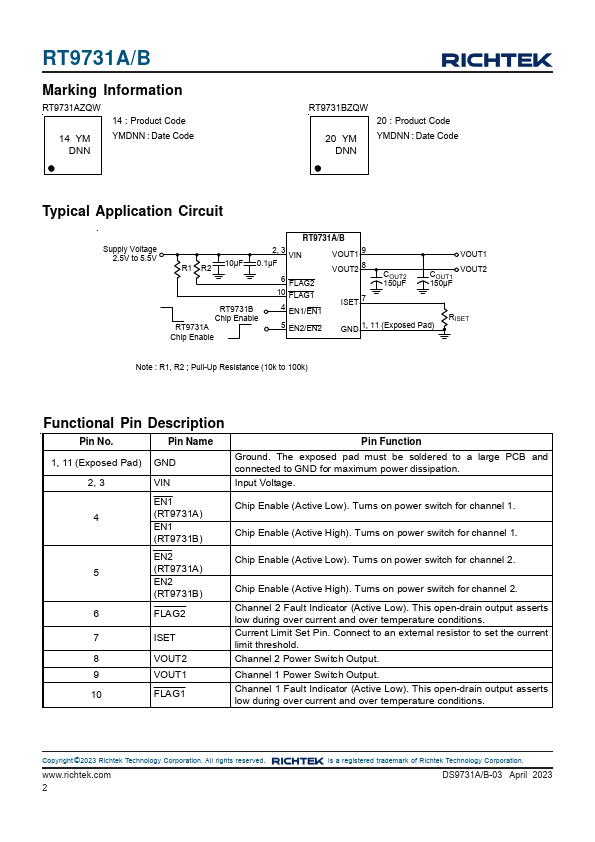
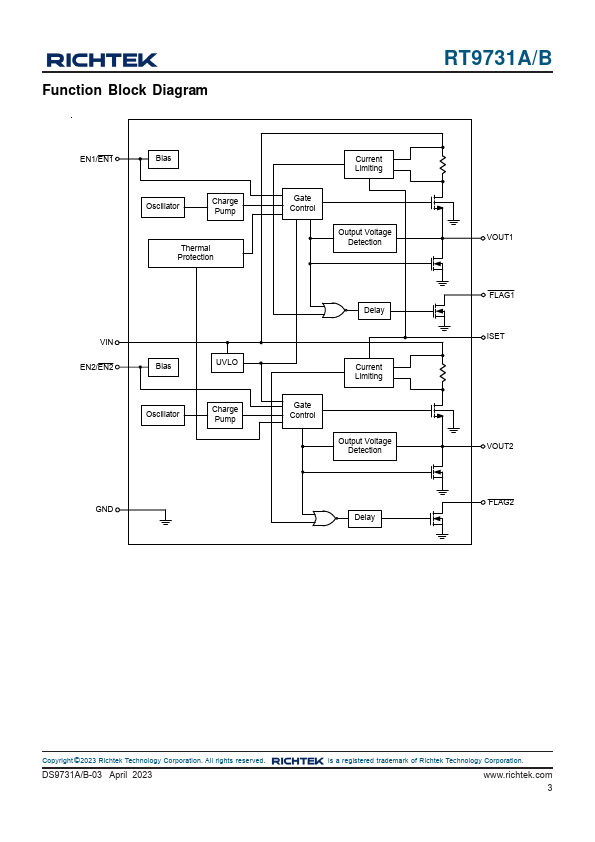
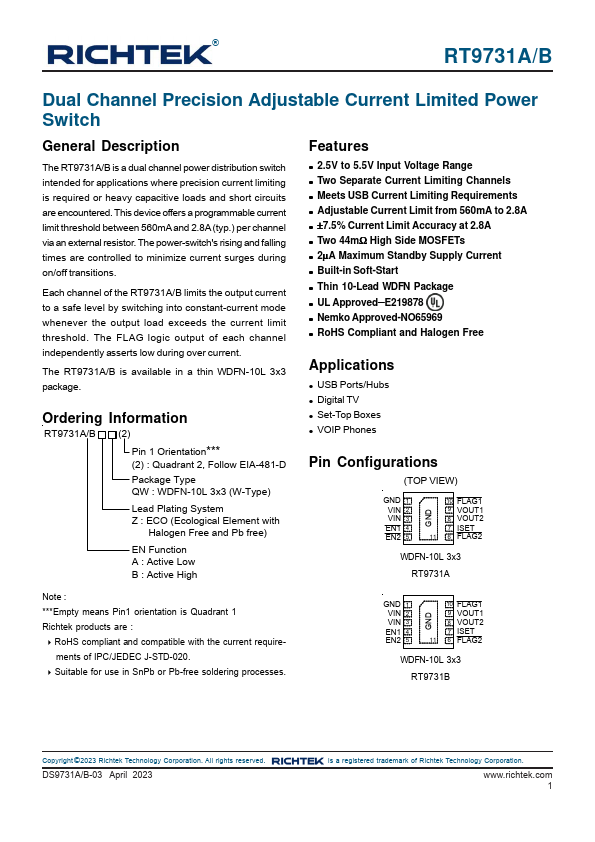
The RT9731A/B is a dual channel power distribution switch intended for applications where precision current limiting is required or heavy capacitive loads and short circuits are encountered.

Features

  • 2.5V to 5.5V Input Voltage Range.
  • Two Separate Current Limiting Channels.
  • Meets USB Current Limiting Requirements.
  • Adjustable Current Limit from 560mA to 2.8A.
  • ±7.5% Current Limit Accuracy at 2.8A.
  • Two 44mΩ High Side MOSFETs.
  • 2μA Maximum Standby Supply Current.
  • Built-in Soft-Start.
  • Thin 10-Lead WDFN Package.
  • UL Approved.
  • E219878.
  • Nemko Approved-NO65969.
  • RoHS Compliant and Halogen Free.

📥 Download Datasheet

Datasheet preview – RT9731B

Datasheet Details

Part number RT9731B
Manufacturer Richtek
File Size 280.00 KB
Description Dual Channel Precision Adjustable Current Limited Power Switch
Datasheet download datasheet RT9731B Datasheet
Additional preview pages of the RT9731B datasheet.
Other Datasheets by Richtek

Full PDF Text Transcription

Click to expand full text
® RT9731A/B Dual Channel Precision Adjustable Current Limited Power Switch General Description The RT9731A/B is a dual channel power distribution switch intended for applications where precision current limiting is required or heavy capacitive loads and short circuits are encountered. This device offers a programmable current limit threshold between 560mA and 2.8A (typ.) per channel via an external resistor. The power-switch's rising and falling times are controlled to minimize current surges during on/off transitions. Each channel of the RT9731A/B limits the output current to a safe level by switching into constant-current mode whenever the output load exceeds the current limit threshold. The FLAG logic output of each channel independently asserts low during over current.
Published: |