
Datasheet Details
| Part number | 74AHCT595S16 |
|---|---|
| Manufacturer | Diodes Incorporated |
| File Size | 251.97 KB |
| Description | 8-BIT SHIFT REGISTER 8-BIT OUTPUT REGISTER |
| Datasheet |
 74AHCT595S16 Datasheet 74AHCT595S16 Datasheet
|
|
|

Download the 74AHCT595S16 datasheet PDF. This datasheet also covers the 74AHCT595 variant, as both devices belong to the same 8-bit shift register 8-bit output register family and are provided as variant models within a single manufacturer datasheet.
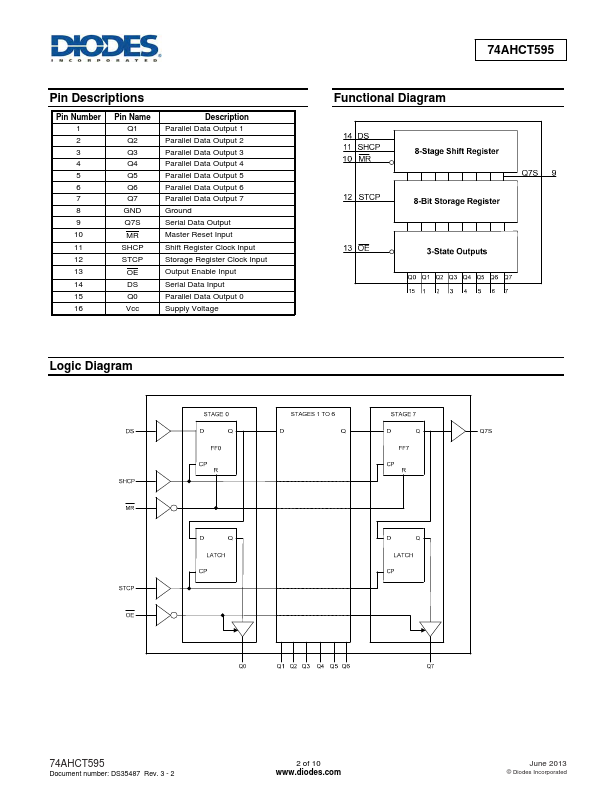
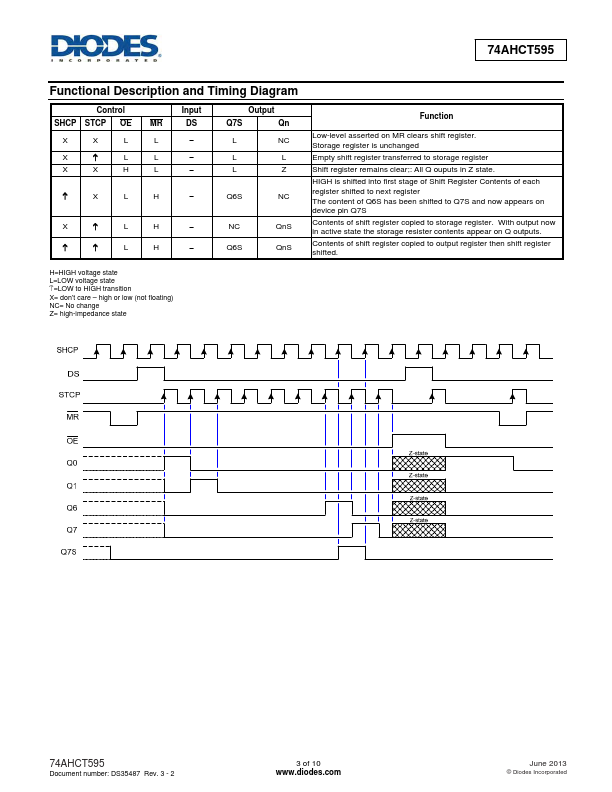
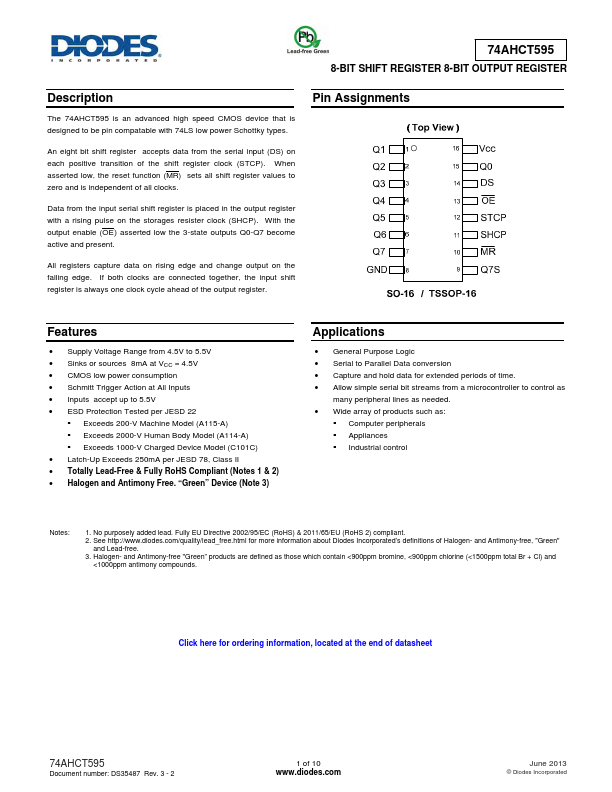
The 74AHCT595 is an advanced high speed CMOS device that is designed to be pin compatable with 74LS low power Schottky types.
An eight bit shift register accepts data from the serial input (DS) on each positive transition of the shift register clock (STCP).
| Part number | 74AHCT595S16 |
|---|---|
| Manufacturer | Diodes Incorporated |
| File Size | 251.97 KB |
| Description | 8-BIT SHIFT REGISTER 8-BIT OUTPUT REGISTER |
| Datasheet |
74AHCT595S16 Datasheet
|
|
|
|
| Part Number | Description | Manufacturer |
|---|---|---|
| 74AHCT595 | 8-bit serial-in/serial or parallel-out shift register | NXP |
| 74AHCT595 | 8-bit serial-in/serial-out or parallel-out shift register | nexperia |
| 74AHCT595-Q100 | 8-bit serial-in/serial-out or parallel-out shift register | nexperia |
| 74AHCT595BQ | 8-bit serial-in/serial-out or parallel-out shift register | nexperia |
| 74AHCT595D | 8-bit serial-in/serial-out or parallel-out shift register | nexperia |
| Part Number | Description |
|---|---|
| 74AHCT595 | 8-BIT SHIFT REGISTER 8-BIT OUTPUT REGISTER |
| 74AHCT595T16 | 8-BIT SHIFT REGISTER 8-BIT OUTPUT REGISTER |
| 74AHCT594 | 8-BIT SHIFT REGISTER |
| 74AHCT594S16 | 8-BIT SHIFT REGISTER |
| 74AHCT594T16 | 8-BIT SHIFT REGISTER |