Datasheet4U Logo Datasheet4U.com

CYM1481 - (CYM1471 / CYM1481) 2048k X 8 SRAM Module

Download the CYM1481 datasheet PDF. This datasheet also covers the CYM1471 variant, as both devices belong to the same (cym1471 / cym1481) 2048k x 8 sram module family and are provided as variant models within a single manufacturer datasheet.

Description

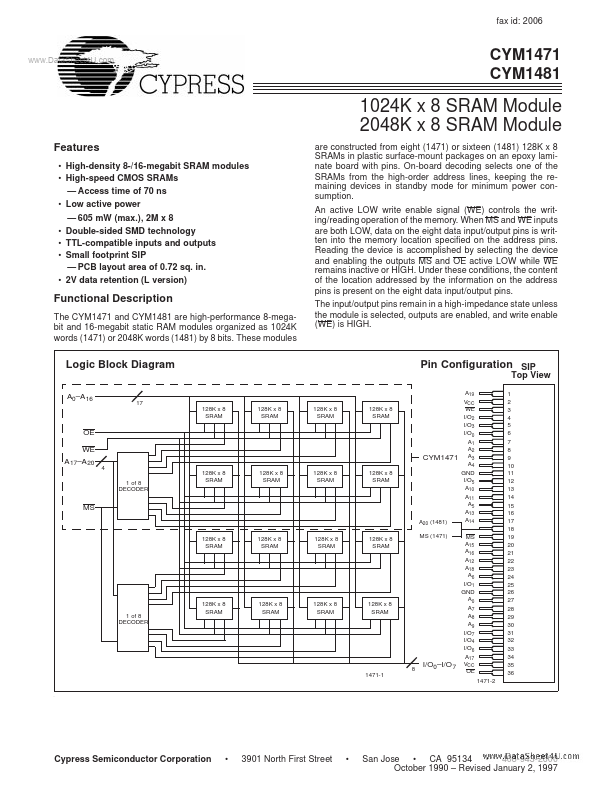
The CYM1471 and CYM1481 are high-performance 8-megabit and 16-megabit static RAM modules organized as 1024K words (1471) or 2048K words (1481) by 8 bits.

A 16 Pin Configuration SIP A19 VCC WE I/O2 I/O3 I/O0 A1 A2 A3 A4 GND I/O5 A10 A11 A5 A13 A14 1 2 3

Features

  • High-density 8-/16-megabit SRAM modules.
  • High-speed CMOS SRAMs.
  • Access time of 70 ns.
  • Low active power.
  • 605 mW (max. ), 2M x 8.
  • Double-sided SMD technology.
  • TTL-compatible inputs and outputs.
  • Small footprint SIP.
  • PCB layout area of 0.72 sq. in.
  • 2V data retention (L version) are constructed from eight (1471) or sixteen (1481) 128K x 8 SRAMs in plastic surface-mount packages on an epoxy laminate board with p.

📥 Download Datasheet

Note: The manufacturer provides a single datasheet file (CYM1471_CypressSemiconductor.pdf) that lists specifications for multiple related part numbers.

Full PDF Text Transcription

Click to expand full text
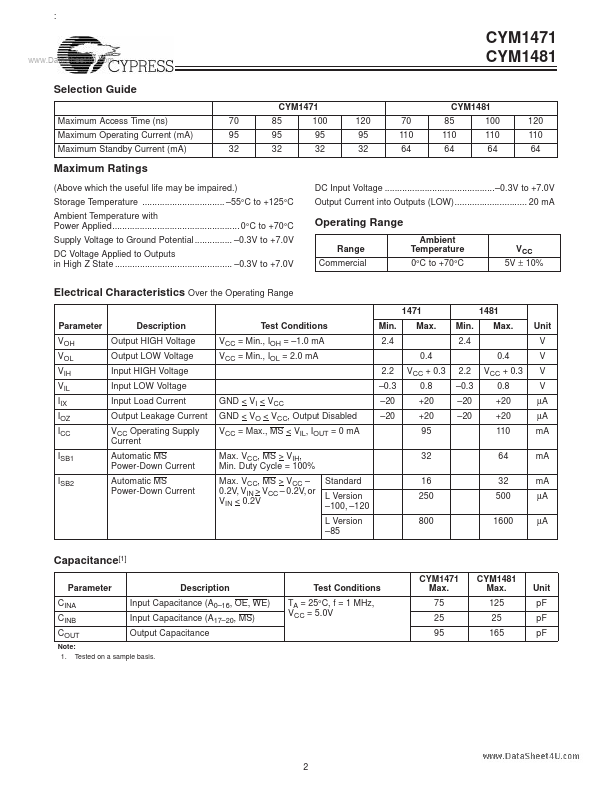
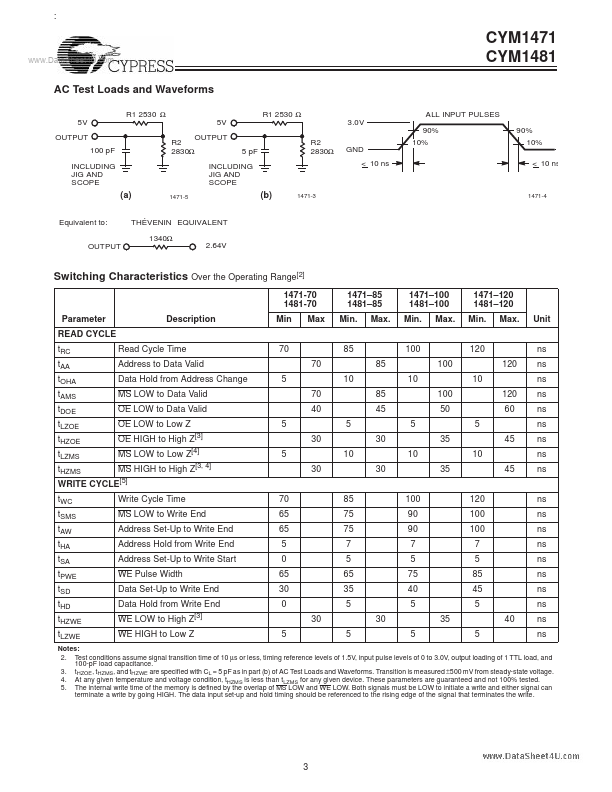
1CY M14 81 fax id: 2006 www.DataSheet4U.com CYM1471 CYM1481 1024K x 8 SRAM Module 2048K x 8 SRAM Module Features • High-density 8-/16-megabit SRAM modules • High-speed CMOS SRAMs — Access time of 70 ns • Low active power — 605 mW (max.), 2M x 8 • Double-sided SMD technology • TTL-compatible inputs and outputs • Small footprint SIP — PCB layout area of 0.72 sq. in. • 2V data retention (L version) are constructed from eight (1471) or sixteen (1481) 128K x 8 SRAMs in plastic surface-mount packages on an epoxy laminate board with pins. On-board decoding selects one of the SRAMs from the high-order address lines, keeping the remaining devices in standby mode for minimum power consumption. An active LOW write enable signal (WE) controls the writing/reading operation of the memory.

Published: |