Datasheet4U Logo Datasheet4U.com

ICS1700A - QuickSaver Charge Controller for Nickel-Cadmium and Nickel-Metal Hydride Batteries

Description

The ICS1700A is a CMOS device designed for the intelligent charge control of either nickel-cadmium (NiCd) or nickel-metal hydride (NiMH) batteries.

The controller uses a pulsed-current charging technique together with voltage slope termination.
Features

  • Multiple charge termination methods include: Voltage slope Maximum temperature Charge timer Four stage charge sequence: Soft start charge Fast charge Topping charge Maintenance charge Reverse-pulse charging available in all charge stages Four programmable charge rates between 15 minutes (4C) and two hours (C/2) Out-of-temperature range detection Hot battery: charger shutdown Cold battery: low current charge Ten second polling mode for battery detection Battery fault with shutdown prote.

📥 Download Datasheet

Datasheet preview – ICS1700A

Datasheet Details

Part number ICS1700A
Manufacturer Unknown Manufacturer
File Size 204.47 KB
Description QuickSaver Charge Controller for Nickel-Cadmium and Nickel-Metal Hydride Batteries
Datasheet download datasheet ICS1700A Datasheet
Additional preview pages of the ICS1700A datasheet.
Other Datasheets by ETC

Full PDF Text Transcription

Click to expand full text
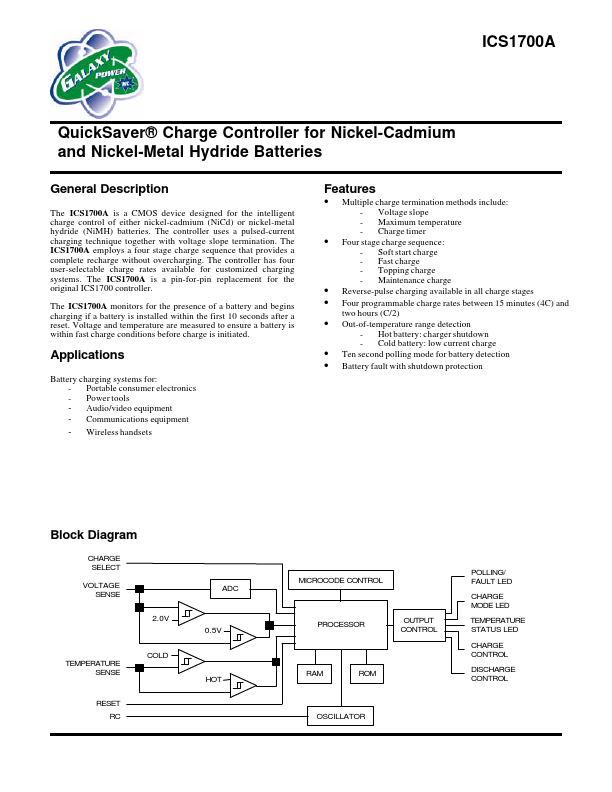
ICS1700A QuickSaver® Charge Controller for Nickel-Cadmium and Nickel-Metal Hydride Batteries General Description The ICS1700A is a CMOS device designed for the intelligent charge control of either nickel-cadmium (NiCd) or nickel-metal hydride (NiMH) batteries. The controller uses a pulsed-current charging technique together with voltage slope termination. The ICS1700A employs a four stage charge sequence that provides a complete recharge without overcharging. The controller has four user-selectable charge rates available for customized charging systems. The ICS1700A is a pin-for-pin replacement for the original ICS1700 controller. The ICS1700A monitors for the presence of a battery and begins charging if a battery is installed within the first 10 seconds after a reset.
Published: |