Datasheet4U Logo Datasheet4U.com

SD6861 - CURRENT MODE PWM+PFM CONTROLLER

Download the SD6861 datasheet PDF (SD6860 included). The manufacturer datasheet provides complete specifications, pinout details, electrical characteristics, and typical applications for current mode pwm+pfm controller.

Description

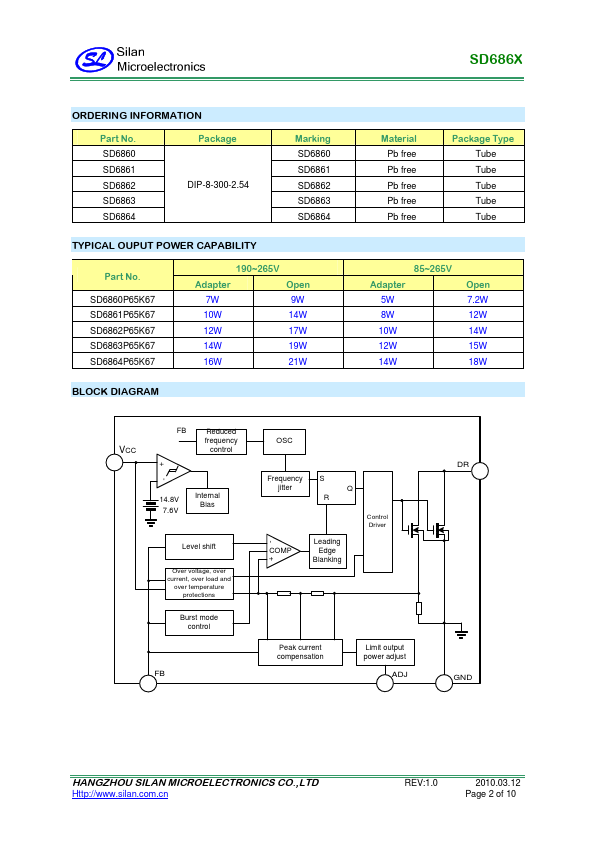
SD686X is current mode PWM+PFM controller with built-in highvoltage MOSFET used for SWPS, with low standby power and low start current for power switch.

In standby mode, the circuit enters burst mode to reduce the standby power dissipation.

Features

  • Energy Star 2.0 standard.
  • Lower start-up current (3µA).
  • Various switching frequency following load for the higher efficiency.
  • Frequency jitter for low EMI.
  • Overvoltage, overcurrent, overload and over temperature protections.
  • Adjustable limit output power.
  • Undervoltage lockout.
  • Built-in high voltage MOSFET.
  • Auto restart mode.
  • Peak current compensation.
  • Maximum peak current compensation for initialization.
  • Burst mode.
  • Cycle by cycl.

📥 Download Datasheet

Note: The manufacturer provides a single datasheet file (SD6860-SILANMICROELECTRONICS.pdf) that lists specifications for multiple related part numbers.

Datasheet Details

Part number SD6861
Manufacturer SILAN MICROELECTRONICS
File Size 244.59 KB
Description CURRENT MODE PWM+PFM CONTROLLER
Datasheet download datasheet SD6861 Datasheet
Other Datasheets by SILAN MICROELECTRONICS

Full PDF Text Transcription

Click to expand full text
SD686X CURRENT MODE PWM+PFM CONTROLLER WITH BUILT-IN HIGH VOLTAGE MOSFET DESCRIPTION SD686X is current mode PWM+PFM controller with built-in highvoltage MOSFET used for SWPS, with low standby power and low start current for power switch. In standby mode, the circuit enters burst mode to reduce the standby power dissipation. The switch frequency is 25~67KHz with jitter frequency for low EMI. Built-in peak current compensation circuit makes the limit output power stable even with different input AC voltage. Limit output power can be adjusted through the resistor. Maximum peak current compensation during power-on reduces pressure on transformer to avoid saturation, the peak current compensation will decrease for balance after power-on.
Published: |