Datasheet4U Logo Datasheet4U.com

RT6252B - Buck Converter

This page provides the datasheet information for the RT6252B, a member of the RT6252A Buck Converter family.

Datasheet Summary

Description

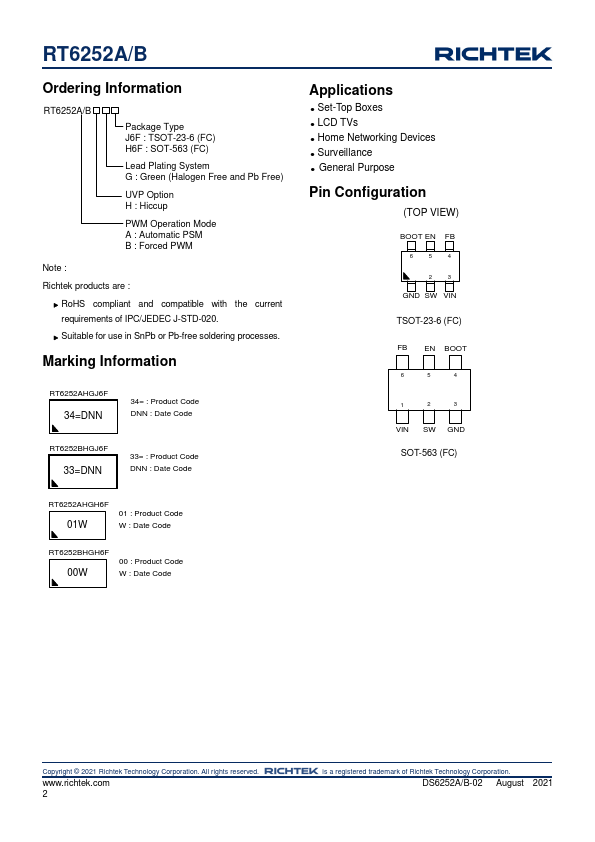
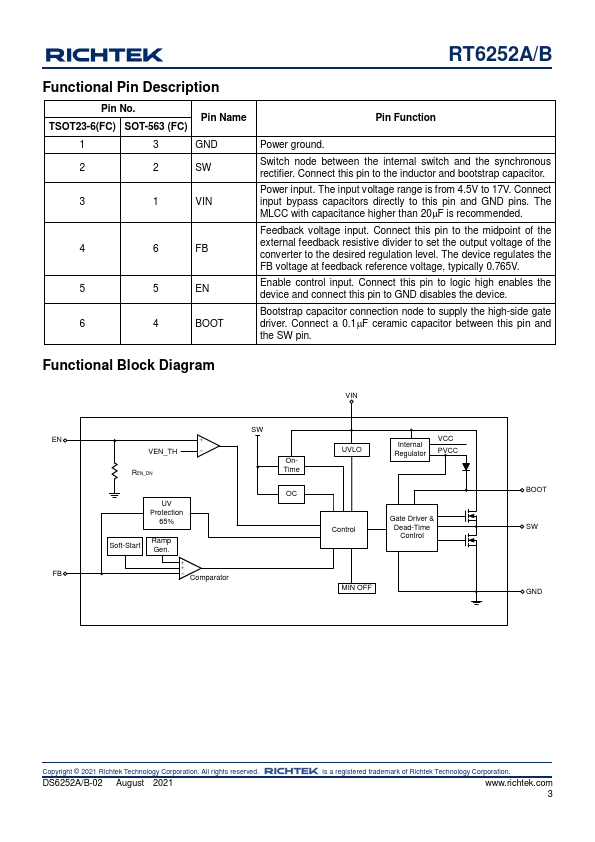
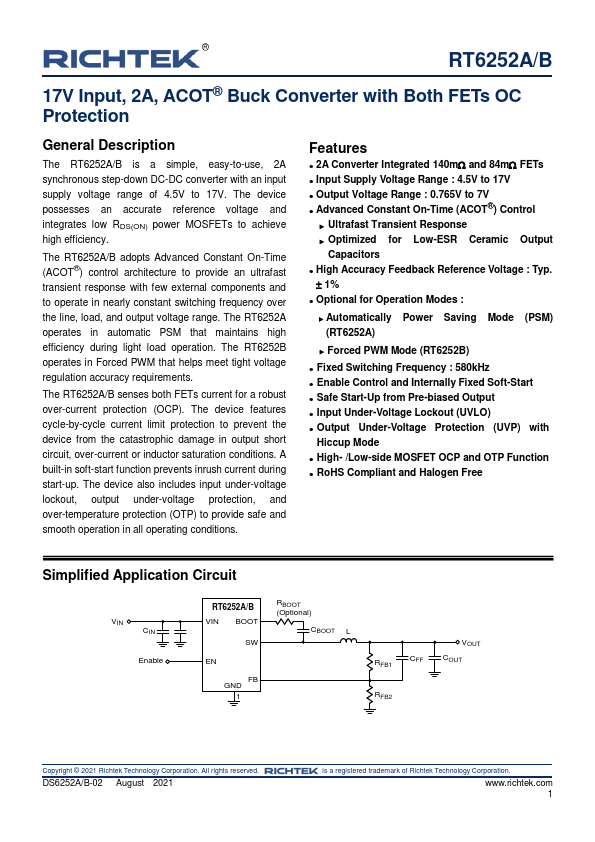
The RT6252A/B is a simple, easy-to-use, 2A synchronous step-down DC-DC converter with an input supply voltage range of 4.5V to 17V.

The device possesses an accurate reference voltage and integrates low RDS(ON) power MOSFETs to achieve high efficiency.

Features

  • cycle-by-cycle current limit protection to prevent the device from the catastrophic damage in output short circuit, over-current or inductor saturation conditions. A built-in soft-start function prevents inrush current during start-up. The device also includes input under-voltage lockout, output under-voltage protection, and over-temperature protection (OTP) to provide safe and smooth operation in all operating conditions. Features.
  • 2A Converter Integrated 140m and 84m FETs.
  • Input S.

📥 Download Datasheet

Datasheet preview – RT6252B

Datasheet Details

Part number RT6252B
Manufacturer Richtek
File Size 1.60 MB
Description Buck Converter
Datasheet download datasheet RT6252B Datasheet
Additional preview pages of the RT6252B datasheet.
Other Datasheets by Richtek

Full PDF Text Transcription

Click to expand full text
RT6252A/B 17V Input, 2A, ACOT® Buck Converter with Both FETs OC Protection General Description The RT6252A/B is a simple, easy-to-use, 2A synchronous step-down DC-DC converter with an input supply voltage range of 4.5V to 17V. The device possesses an accurate reference voltage and integrates low RDS(ON) power MOSFETs to achieve high efficiency. The RT6252A/B adopts Advanced Constant On-Time (ACOT® ) control architecture to provide an ultrafast transient response with few external components and to operate in nearly constant switching frequency over the line, load, and output voltage range. The RT6252A operates in automatic PSM that maintains high efficiency during light load operation. The RT6252B operates in Forced PWM that helps meet tight voltage regulation accuracy requirements.
Published: |