Datasheet4U Logo Datasheet4U.com

PI6C557-03B - PCIe 3.0 Clock Generator

Datasheet Summary

Description

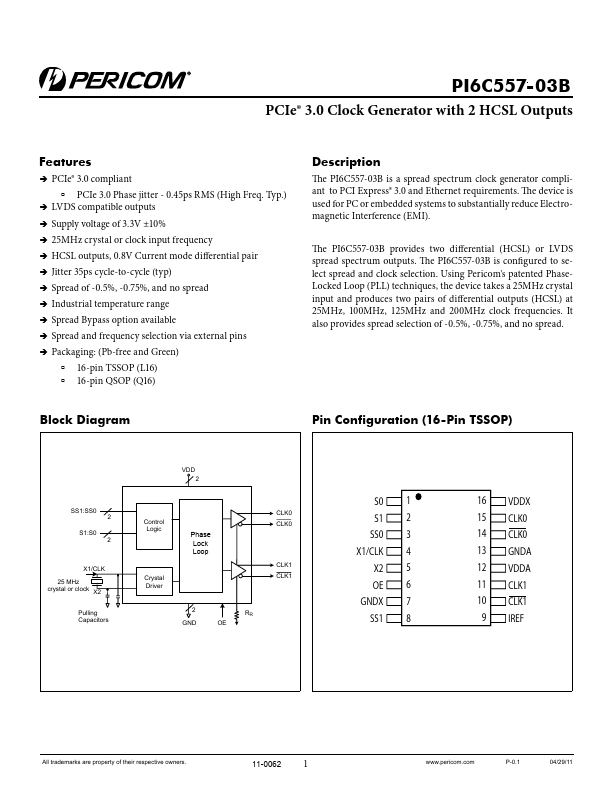
The PI6C557-03B is a spread spectrum clock generator compliant to PCI Express® 3.0 and Ethernet requirements.

The device is used for PC or embedded systems to substantially reduce Electromagnetic Interference (EMI).

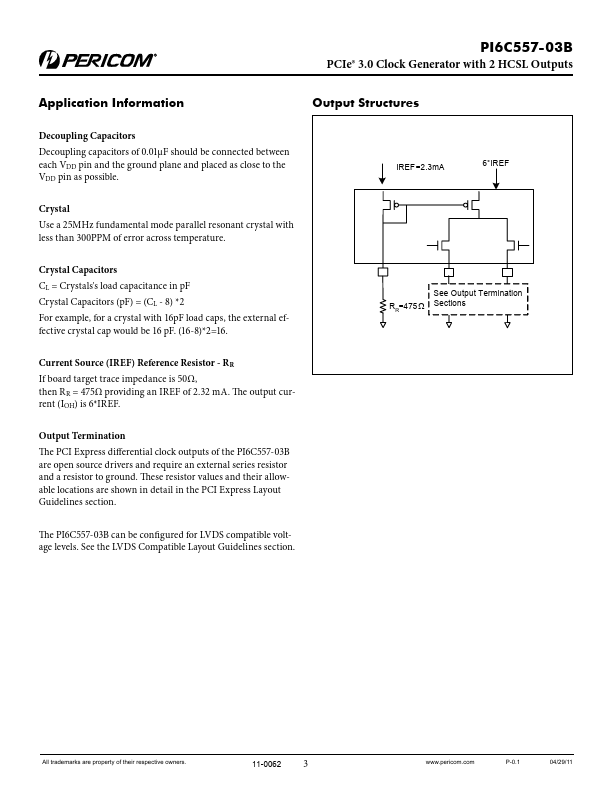
The PI6C557-03B provides two differential (HCSL) or LVDS spread spectrum outputs.

Features

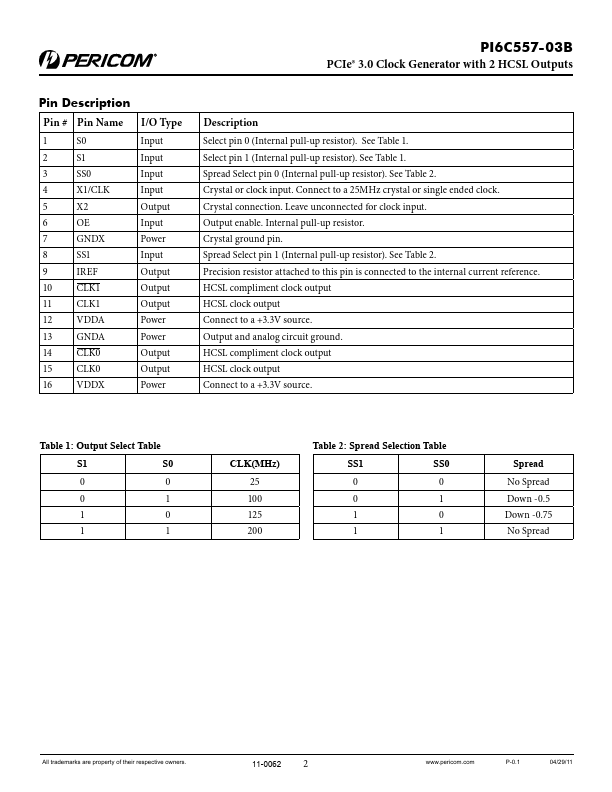
  • ÎÎPCIe® 3.0 compliant àà PCIe 3.0 Phase jitter - 0.45ps RMS (High Freq. Typ. ) ÎÎLVDS compatible outputs ÎÎSupply voltage of 3.3V ±10% ÎÎ25MHz crystal or clock input frequency ÎÎHCSL outputs, 0.8V Current mode differential pair ÎÎJitter 35ps cycle-to-cycle (typ) ÎÎSpread of -0.5%, -0.75%, and no spread ÎÎIndustrial temperature range ÎÎSpread Bypass option available ÎÎSpread and frequency selection via external pins ÎÎPackaging: (Pb-free and Green) àà 16-pin TSSOP (L16) àà 16-pin QSOP (Q16).

📥 Download Datasheet

Datasheet preview – PI6C557-03B

Datasheet Details

Part number PI6C557-03B
Manufacturer Pericom Semiconductor
File Size 581.17 KB
Description PCIe 3.0 Clock Generator
Datasheet download datasheet PI6C557-03B Datasheet
Additional preview pages of the PI6C557-03B datasheet.
Other Datasheets by Pericom Semiconductor

Full PDF Text Transcription

Click to expand full text
PI6C557-03B PCIe® 3.0 Clock Generator with 2 HCSL Outputs Features ÎÎPCIe® 3.0 compliant àà PCIe 3.0 Phase jitter - 0.45ps RMS (High Freq. Typ.) ÎÎLVDS compatible outputs ÎÎSupply voltage of 3.3V ±10% ÎÎ25MHz crystal or clock input frequency ÎÎHCSL outputs, 0.8V Current mode differential pair ÎÎJitter 35ps cycle-to-cycle (typ) ÎÎSpread of -0.5%, -0.75%, and no spread ÎÎIndustrial temperature range ÎÎSpread Bypass option available ÎÎSpread and frequency selection via external pins ÎÎPackaging: (Pb-free and Green) àà 16-pin TSSOP (L16) àà 16-pin QSOP (Q16) Description The PI6C557-03B is a spread spectrum clock generator compliant to PCI Express® 3.0 and Ethernet requirements. The device is used for PC or embedded systems to substantially reduce Electromagnetic Interference (EMI).
Published: |