
Datasheet Details
| Part number | JW1806C |
|---|---|
| Manufacturer | JoulWatt |
| File Size | 926.20 KB |
| Description | TRIAC Dimmable Boost LED Driver |
| Datasheet |
 JW1806C Datasheet JW1806C Datasheet
|
|
|

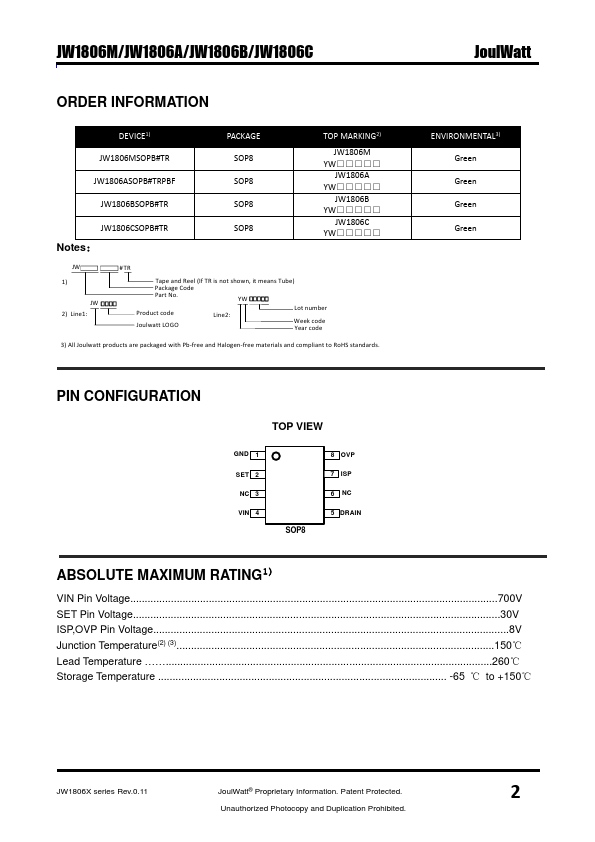
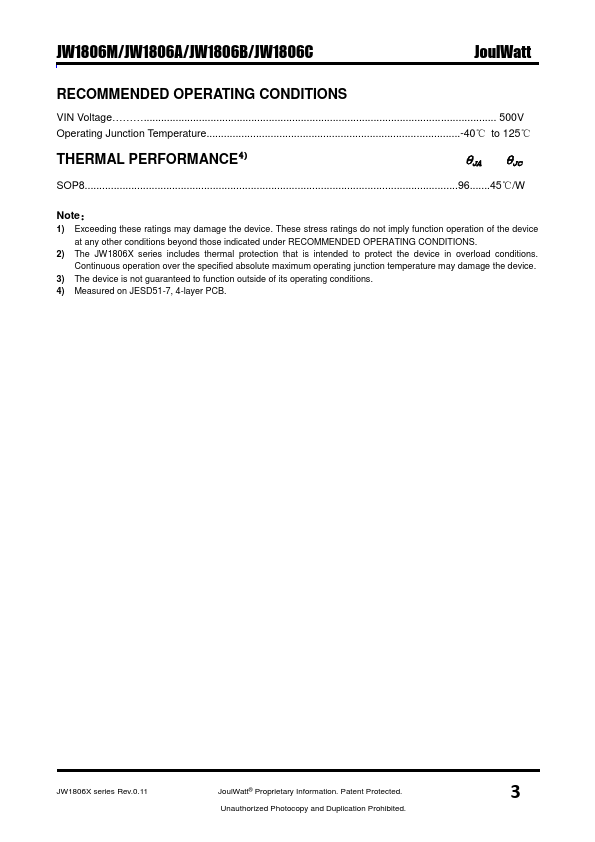
Download the JW1806C datasheet PDF. This datasheet also covers the JW1806M variant, as both devices belong to the same triac dimmable boost led driver family and are provided as variant models within a single manufacturer datasheet.
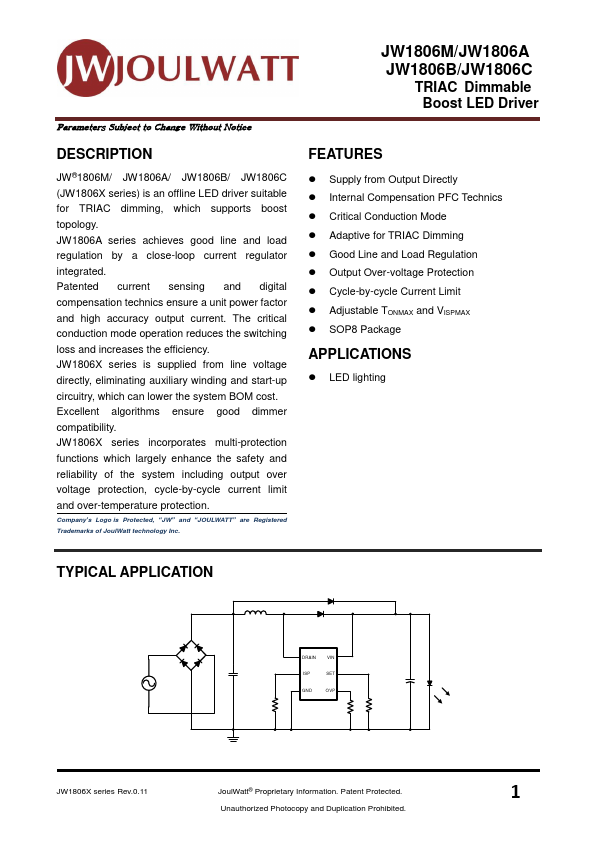
JW®1806M/ JW1806A/ JW1806B/ JW1806C (JW1806X series) is an offline LED driver suitable for TRIAC dimming, which supports boost topology.
JW1806A series achieves good line and load regulation by a close-loop current regulator integrated.
| Part number | JW1806C |
|---|---|
| Manufacturer | JoulWatt |
| File Size | 926.20 KB |
| Description | TRIAC Dimmable Boost LED Driver |
| Datasheet |
JW1806C Datasheet
|
|
|
|
| Part Number | Description | Manufacturer |
|---|---|---|
| JW1236B | Full color LED control chip | ETC |
| JW1758A | Offline Step-down LED Controller | SPMICRO |
| JW1758B | Offline Step-down LED Controller | SPMICRO |
| JW1758C | Offline Step-down LED Controller | SPMICRO |
| JW1760 | Non-Isolated Buck LED Driver Controller | SPMICRO |
| Part Number | Description |
|---|---|
| JW1806A | TRIAC Dimmable Boost LED Driver |
| JW1806B | TRIAC Dimmable Boost LED Driver |
| JW1806M | TRIAC Dimmable Boost LED Driver |
| JW18288B | PWM Dimmable Non-isolated Buck LED Regulator |
| JW18288C | PWM Dimmable Non-isolated Buck LED Regulator |
The following content is an automatically extracted verbatim text from the original manufacturer datasheet and is provided for reference purposes only.