Datasheet4U Logo Datasheet4U.com

HCS374MS - Radiation Hardened Octal D-Type Flip-Flop/ Three-State/ Positive Edge Triggered

Datasheet Summary

Description

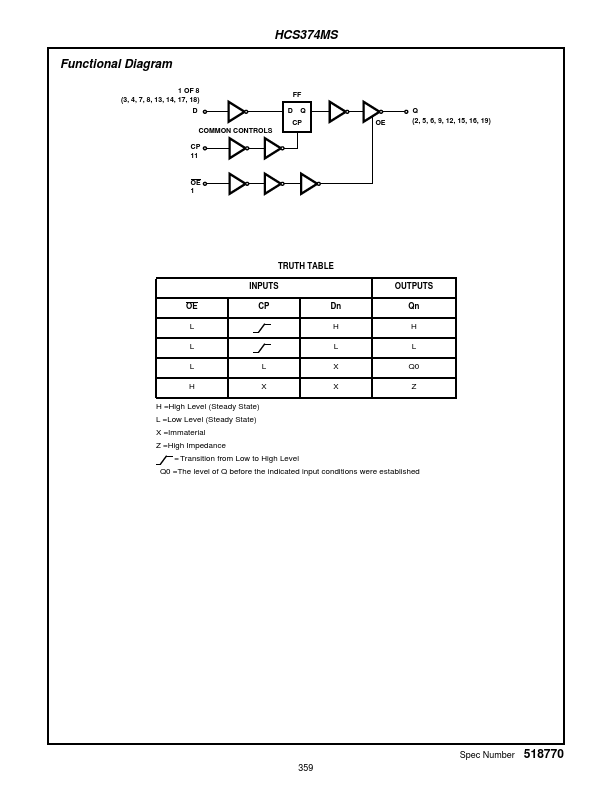
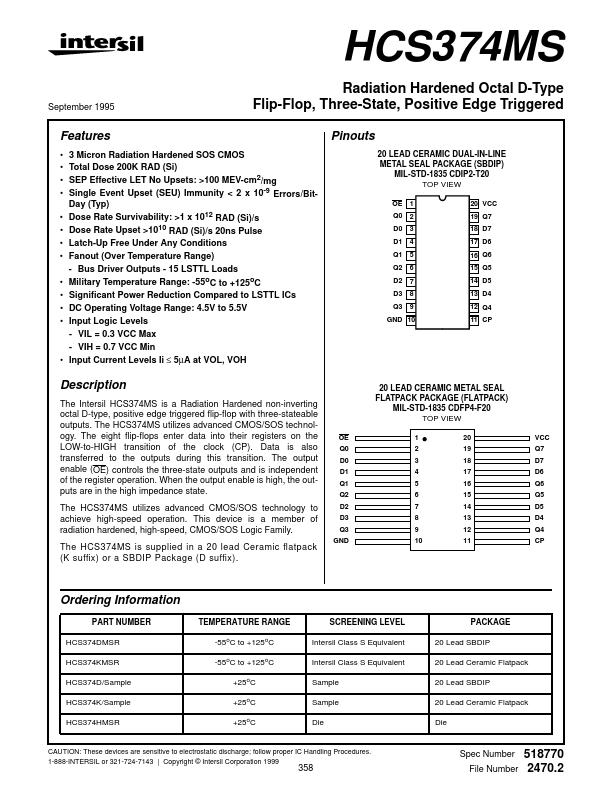
The Intersil HCS374MS is a Radiation Hardened non-inverting octal D-type, positive edge triggered flip-flop with three-stateable outputs.

The HCS374MS utilizes advanced CMOS/SOS technology.

The eight flip-flops enter data into their registers on the LOW-to-HIGH transition of the clock (CP).

Features

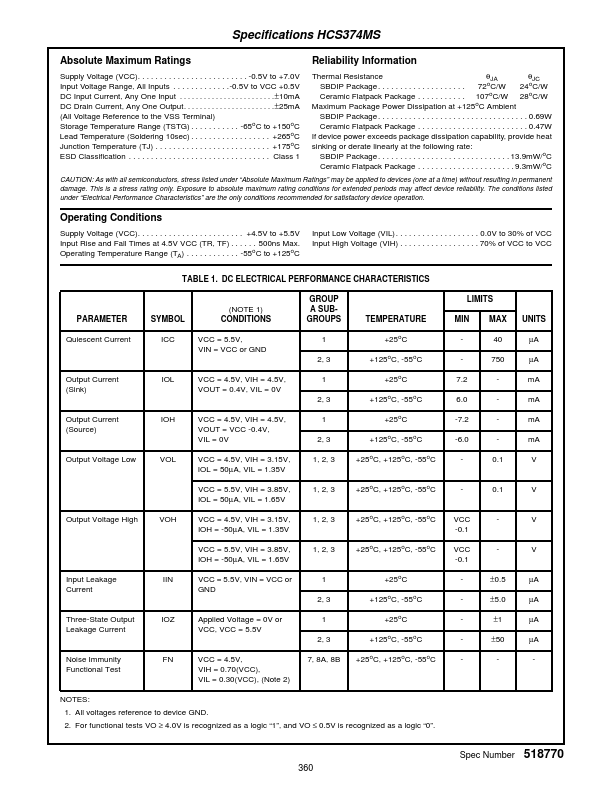
  • 3 Micron Radiation Hardened SOS CMOS Total Dose 200K RAD (Si) SEP Effective LET No Upsets: >100 MEV-cm2/mg Single Event Upset (SEU) Immunity < 2 x 10⁻⁹ Errors/BitDay (Typ) Dose Rate Survivability: >1 x 10¹² RAD (Si)/s Dose Rate Upset >1010 RAD (Si)/s 20ns Pulse Latch-Up Free Under Any Conditions Fanout (Over Temperature Range) - Bus Driver Outputs - 15 LSTTL Loads Military Temp.

📥 Download Datasheet

Datasheet preview – HCS374MS

Datasheet Details

Part number HCS374MS
Manufacturer Intersil Corporation
File Size 175.06 KB
Description Radiation Hardened Octal D-Type Flip-Flop/ Three-State/ Positive Edge Triggered
Datasheet download datasheet HCS374MS Datasheet
Additional preview pages of the HCS374MS datasheet.
Other Datasheets by Intersil Corporation

Full PDF Text Transcription

Click to expand full text
HCS374MS September 1995 Radiation Hardened Octal D-Type Flip-Flop, Three-State, Positive Edge Triggered Pinouts 20 LEAD CERAMIC DUAL-IN-LINE METAL SEAL PACKAGE (SBDIP) MIL-STD-1835 CDIP2-T20 TOP VIEW OE Q0 D0 D1 Q1 Q2 D2 D3 Q3 1 2 3 4 5 6 7 8 9 20 VCC 19 Q7 18 D7 17 D6 16 Q6 15 Q5 14 D5 13 D4 12 Q4 11 CP Features • • • • • • • • • • • • 3 Micron Radiation Hardened SOS CMOS Total Dose 200K RAD (Si) SEP Effective LET No Upsets: >100 MEV-cm2/mg Single Event Upset (SEU) Immunity < 2 x 10⁻⁹ Errors/BitDay (Typ) Dose Rate Survivability: >1 x 10¹² RAD (Si)/s Dose Rate Upset >1010 RAD (Si)/s 20ns Pulse Latch-Up Free Under Any Conditions Fanout (Over Temperature Range) - Bus Driver Outputs - 15 LSTTL Loads Military Temperature Range: -55oC to +125oC Significant Power Reduction Compared to LSTTL ICs
Published: |