
Datasheet Details
| Part number | 74HCT595PW |
|---|---|
| Manufacturer | Nexperia |
| File Size | 323.46 KB |
| Description | serial or parallel-out shift register |
| Datasheet |
 74HCT595PW Datasheet 74HCT595PW Datasheet
|
|
|

Download the 74HCT595PW datasheet PDF. This datasheet also covers the 74HC595 variant, as both devices belong to the same serial or parallel-out shift register family and are provided as variant models within a single manufacturer datasheet.
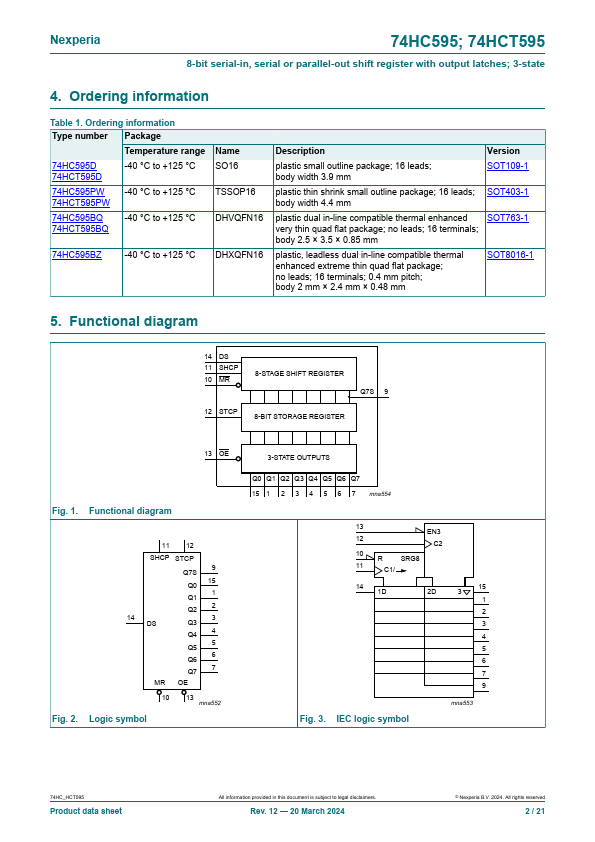
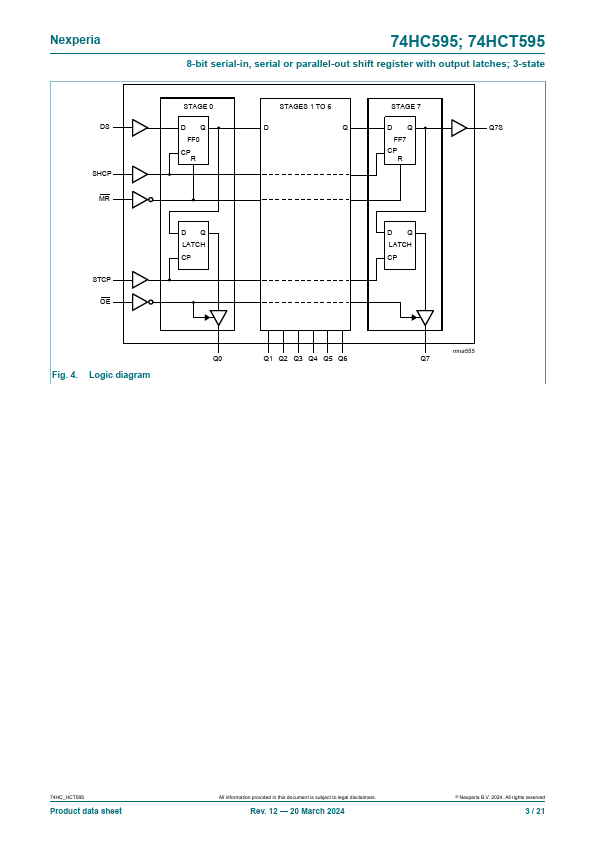
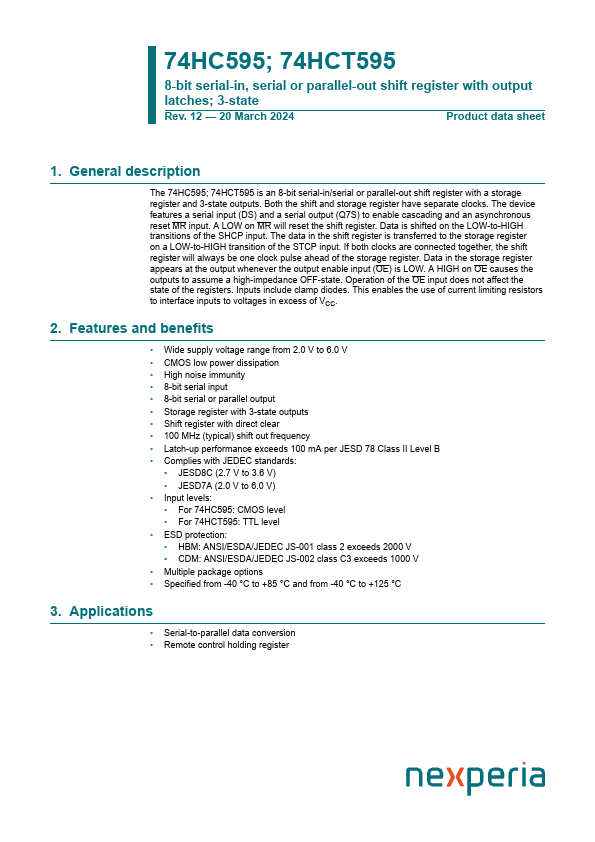
The 74HC595; 74HCT595 is an 8-bit serial-in/serial or parallel-out shift register with a storage register and 3-state outputs.
Both the shift and storage register have separate clocks.
| Part number | 74HCT595PW |
|---|---|
| Manufacturer | Nexperia |
| File Size | 323.46 KB |
| Description | serial or parallel-out shift register |
| Datasheet |
74HCT595PW Datasheet
|
|
|
|
| Part Number | Description | Manufacturer |
|---|---|---|
| 74HCT595 | 8-bit serial-in serial or parallel-out shift register | NXP |
| 74HCT595 | 8-BIT SHIFT REGISTER | Diodes |
| 74HCT595S16 | 8-BIT SHIFT REGISTER | Diodes |
| 74HCT595T16 | 8-BIT SHIFT REGISTER | Diodes |
| 74HCT594 | 8-BIT SHIFT REGISTER | Diodes |
| Part Number | Description |
|---|---|
| 74HCT595 | serial or parallel-out shift register |
| 74HCT595-Q100 | serial or parallel-out shift register |
| 74HCT595BQ | serial or parallel-out shift register |
| 74HCT595D | serial or parallel-out shift register |
| 74HCT595DB | serial or parallel-out shift register |
The following content is an automatically extracted verbatim text from the original manufacturer datasheet and is provided for reference purposes only.