
Datasheet Details
| Part number | GBJ1504 |
|---|---|
| Manufacturer | SEMTECH |
| File Size | 587.18 KB |
| Description | GLASS PASSIVATED SINGLE-PHASE BRIDGE RECTIFIER |
| Datasheet |
 GBJ1504 Datasheet GBJ1504 Datasheet
|
|
|

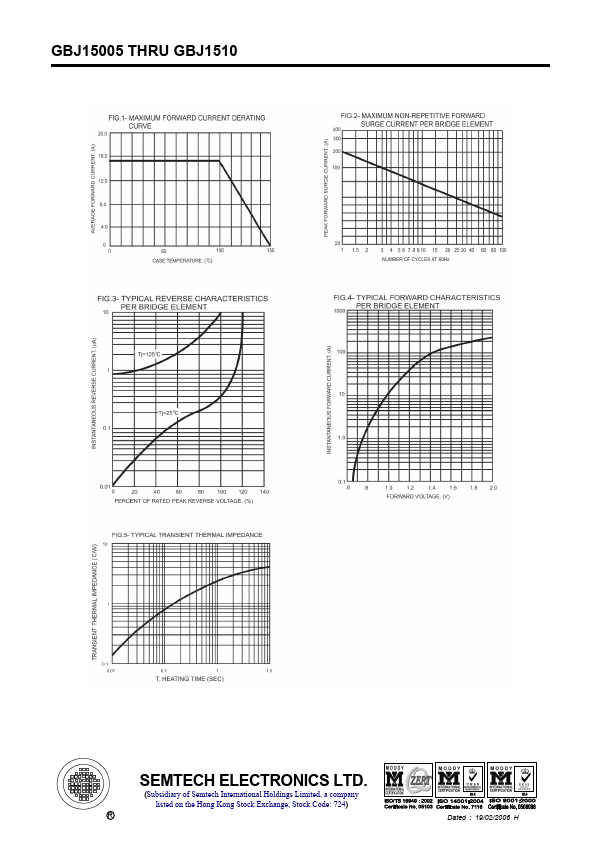
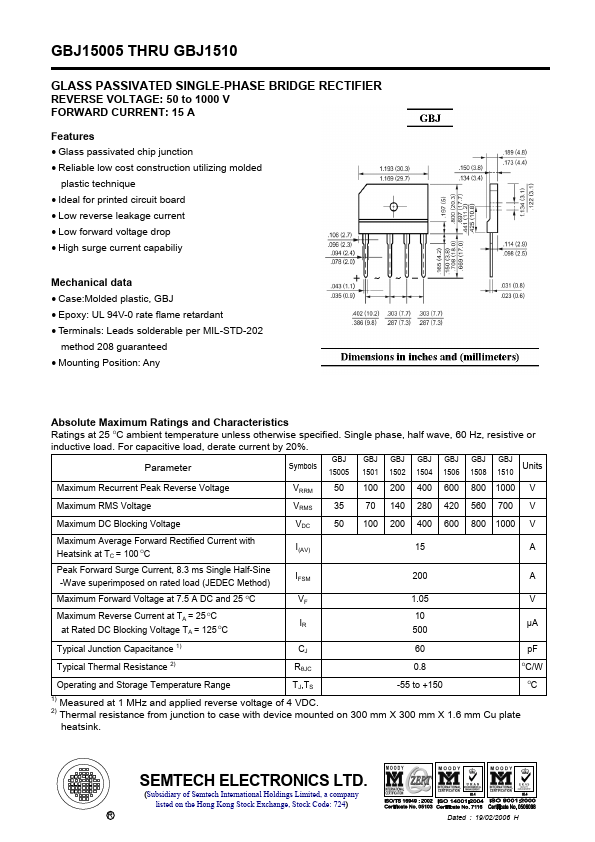
Download the GBJ1504 datasheet PDF. This datasheet also covers the GBJ15005 variant, as both devices belong to the same glass passivated single-phase bridge rectifier family and are provided as variant models within a single manufacturer datasheet.
| Part number | GBJ1504 |
|---|---|
| Manufacturer | SEMTECH |
| File Size | 587.18 KB |
| Description | GLASS PASSIVATED SINGLE-PHASE BRIDGE RECTIFIER |
| Datasheet |
GBJ1504 Datasheet
|
|
|
|
| Part Number | Description | Manufacturer |
|---|---|---|
| GBJ1504 | Bridge Rectifier | First Silicon |
| GBJ1504 | 15A GLASS PASSIVATED BRIDGE RECTIFIER | Diodes Incorporated |
| GBJ1504 | 15 Amp Glass Passivated Bridge Rectifier | Micro Commercial Components |
| GBJ1504 | 15A Miniature Glass Passivated Single-Phase Bridge Rectifiers | CITC |
| GBJ1504 | Bridge Rectifiers | Yangzhou Yangjie |
| Part Number | Description |
|---|---|
| GBJ15005 | GLASS PASSIVATED SINGLE-PHASE BRIDGE RECTIFIER |
| GBJ1501 | GLASS PASSIVATED SINGLE-PHASE BRIDGE RECTIFIER |
| GBJ1502 | GLASS PASSIVATED SINGLE-PHASE BRIDGE RECTIFIER |
| GBJ1506 | GLASS PASSIVATED SINGLE-PHASE BRIDGE RECTIFIER |
| GBJ1508 | GLASS PASSIVATED SINGLE-PHASE BRIDGE RECTIFIER |
The following content is an automatically extracted verbatim text from the original manufacturer datasheet and is provided for reference purposes only.