Datasheet4U Logo Datasheet4U.com

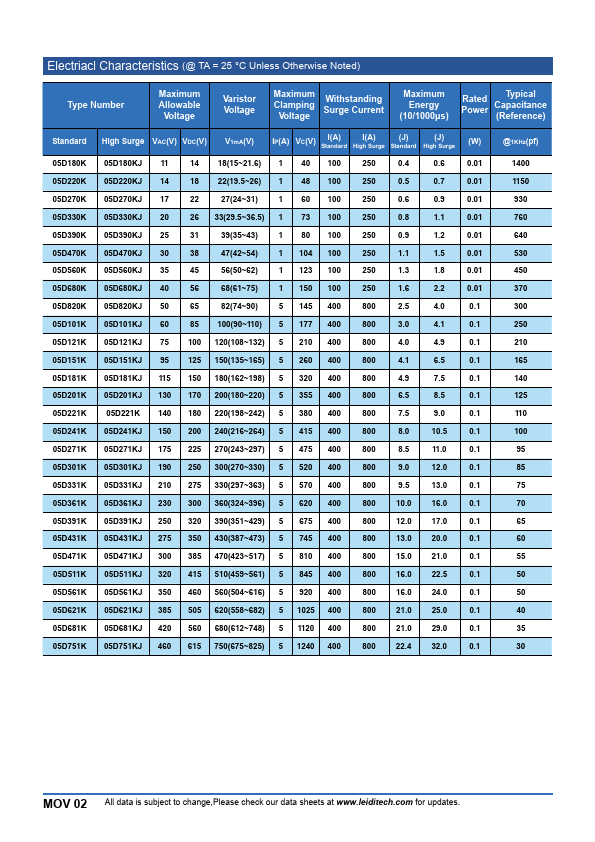
05D431K - Metal Oxide Varistors

Download the 05D431K datasheet PDF. This datasheet also covers the 05D180K variant, as both devices belong to the same metal oxide varistors family and are provided as variant models within a single manufacturer datasheet.

Features

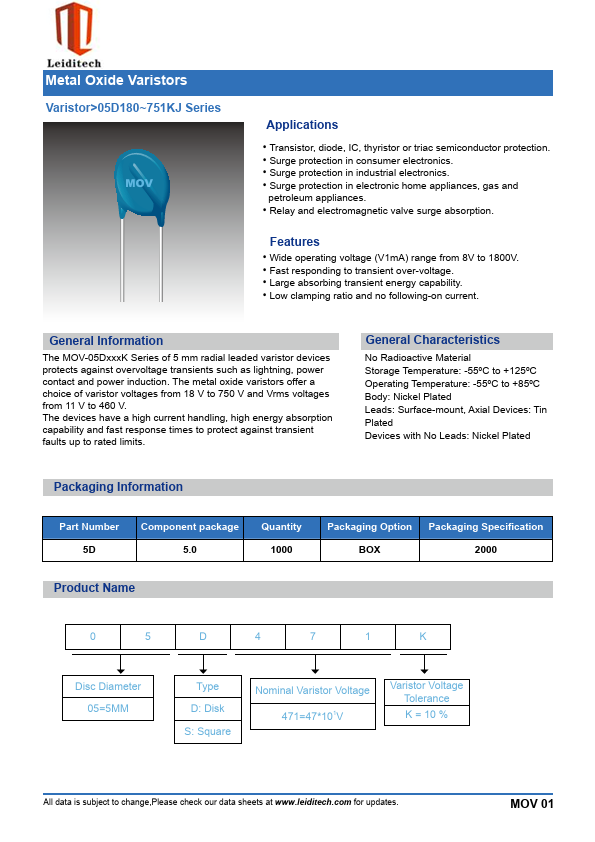
  • Wide operating voltage (V1mA) range from 8V to 1800V.
  • Fast responding to transient over-voltage.
  • Large absorbing transient energy capability.
  • Low clamping ratio and no following-on current. General Information The MOV-05DxxxK Series of 5 mm radial leaded varistor devices protects against overvoltage transients such as lightning, power contact and power induction. The metal oxide varistors offer a choice of varistor voltages from 18 V to 750 V and Vrms vol.

📥 Download Datasheet

Note: The manufacturer provides a single datasheet file (05D180K-leiditech.pdf) that lists specifications for multiple related part numbers.

Datasheet Details

Part number 05D431K
Manufacturer Lleiditech
File Size 669.21 KB
Description Metal Oxide Varistors
Datasheet download datasheet 05D431K Datasheet

Full PDF Text Transcription (Reference)

The following content is an automatically extracted verbatim text from the original manufacturer datasheet and is provided for reference purposes only.

View original datasheet text
Metal Oxide Varistors Varistor>05D180~751KJ Series MOV Applications • Transistor, diode, IC, thyristor or triac semiconductor protection. • Surge protection in consumer electronics. • Surge protection in industrial electronics. • Surge protection in electronic home appliances, gas and petroleum appliances. • Relay and electromagnetic valve surge absorption. Features • Wide operating voltage (V1mA) range from 8V to 1800V. • Fast responding to transient over-voltage. • Large absorbing transient energy capability. • Low clamping ratio and no following-on current. General Information The MOV-05DxxxK Series of 5 mm radial leaded varistor devices protects against overvoltage transients such as lightning, power contact and power induction.
Published: |