ZMD31020
Key Features
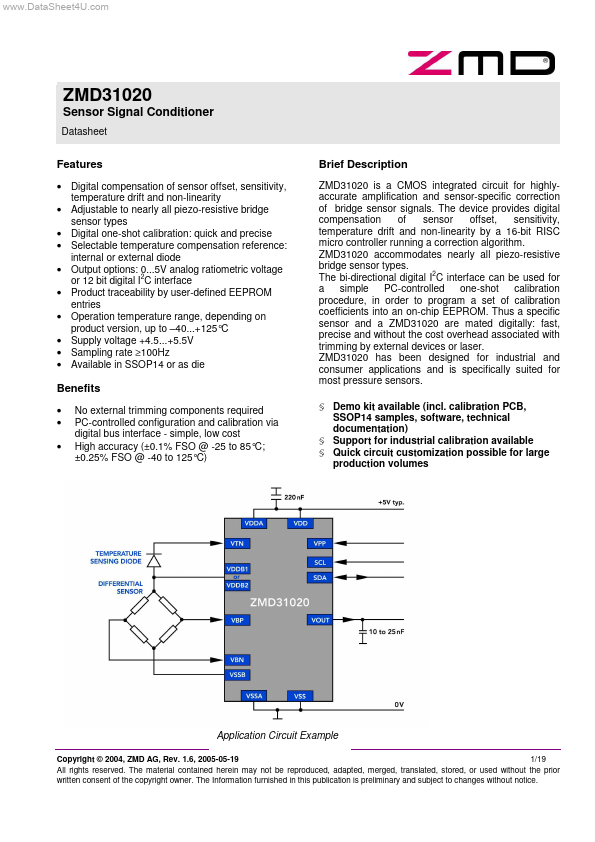
- Digital pensation of sensor offset, sensitivity, temperature drift and non-linearity
- Adjustable to nearly all piezo-resistive bridge sensor types
- Digital one-shot calibration: quick and precise
- Selectable temperature pensation reference: internal or external diode
- Output options: 0...5V analog ratiometric voltage 2 or 12 bit digital I C interface
- Product traceability by user-defined EEPROM entries
- Operation temperature range, depending on product version, up to –40...+125° C
- Supply voltage +4.5...+5.5V
- Sampling rate ≥100Hz
- Available in SSOP14 or as die
Applications
- 2. PIN DESCRIPTION ......................................................................................................................................3 CIRCUIT DESCRIPTION .............................................................................................................................4 2.1 Signal Flow ....................................................................................................................................................4 2.2 Configuration Word........................................................................................................................................5 2.3 Differential Sensor ....................................................................................................................................5 2.4 Temperature Sensing ...............................................................................................................................5 2.5 Analog Input Channel ...............................................................................................................................6 2.5.1 Bridge Polarity Setting .......................................................................................................................6 2.5.2 Programmable Gain Amplifier PGA...................................................................................................6 2.5.3 Analog-to-digital Converter ADC .......................................................................................................6 2.5.4 Temperature Measurement