Datasheet4U Logo Datasheet4U.com

MAX9761 - Stereo 3W Audio Power Amplifiers

Download the MAX9761 datasheet PDF. This datasheet also covers the MAX9760 variant, as both devices belong to the same stereo 3w audio power amplifiers family and are provided as variant models within a single manufacturer datasheet.

Description

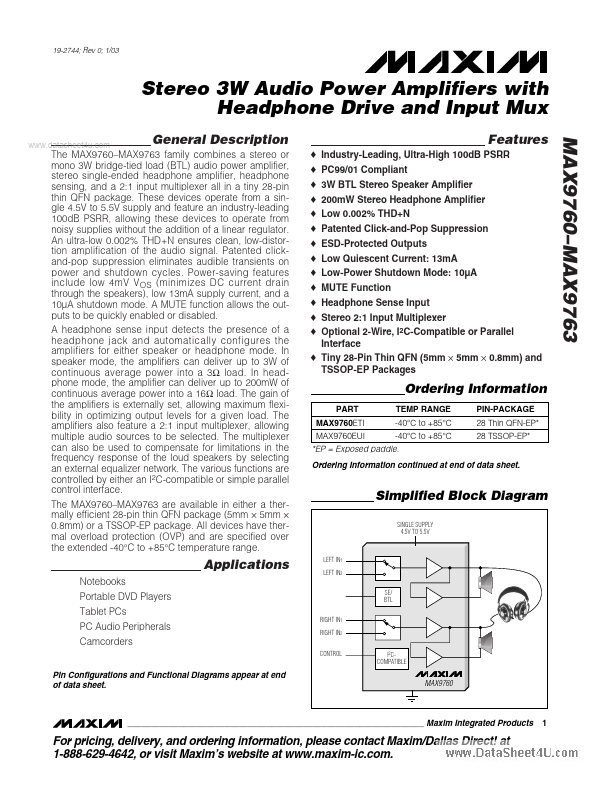
o PC99/01 Compliant o 3W BTL Stereo Speaker Amplifier o 200mW Stereo Headphone Amplifier o Low 0.002% THD+N

Features

  • o Industry-Leading, Ultra-High 100dB PSRR MAX9760.
  • MAX9763 The MAX9760.
  • MAX9763 family combines a stereo or mono 3W bridge-tied load (BTL) audio power amplifier, stereo single-ended headphone amplifier, headphone sensing, and a 2:1 input multiplexer all in a tiny 28-pin thin QFN package. These devices operate from a single 4.5V to 5.5V supply and feature an industry-leading 100dB PSRR, allowing these devices to operate from noisy supplies without the addition of a linear regulato.

📥 Download Datasheet

Note: The manufacturer provides a single datasheet file (MAX9760_MaximIntegratedProducts.pdf) that lists specifications for multiple related part numbers.

Full PDF Text Transcription (Reference)

The following content is an automatically extracted verbatim text from the original manufacturer datasheet and is provided for reference purposes only.

View original datasheet text
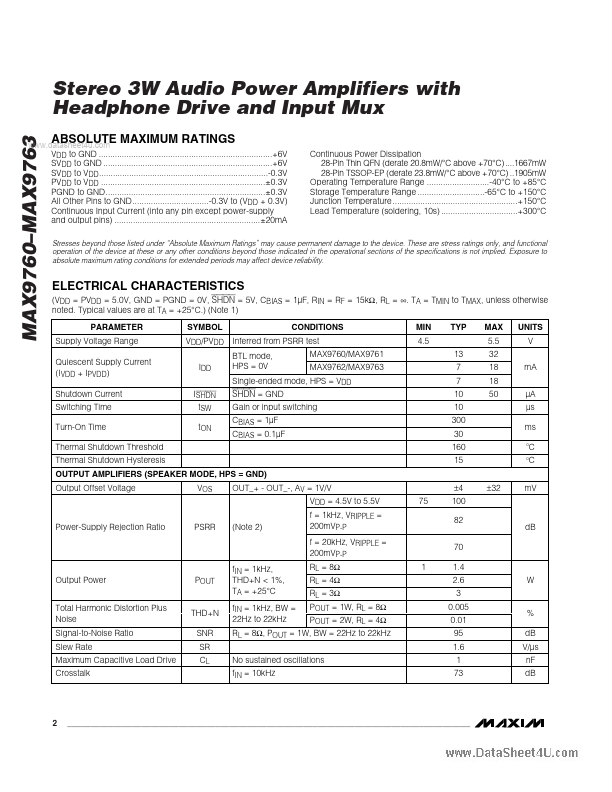
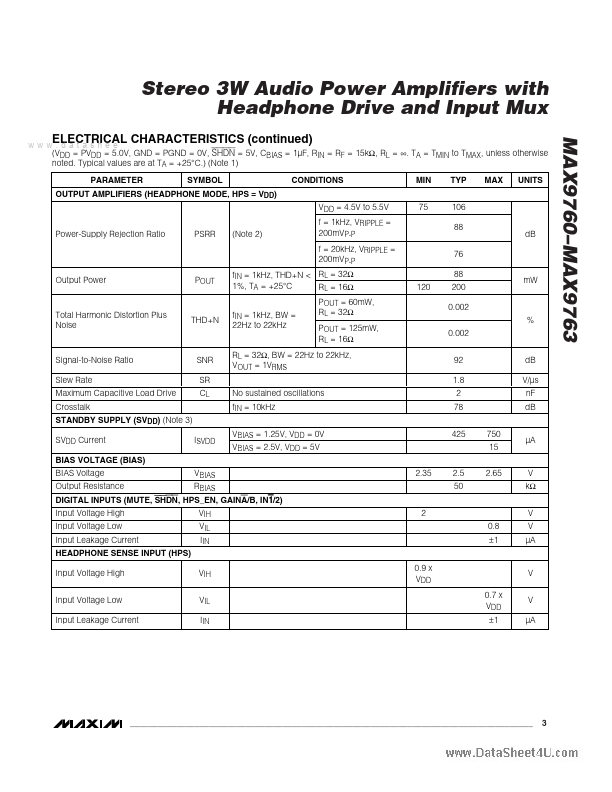
19-2744; Rev 0; 1/03 Stereo 3W Audio Power Amplifiers with Headphone Drive and Input Mux www.datasheet4u.com General Description o PC99/01 Compliant o 3W BTL Stereo Speaker Amplifier o 200mW Stereo Headphone Amplifier o Low 0.002% THD+N Features o Industry-Leading, Ultra-High 100dB PSRR MAX9760–MAX9763 The MAX9760–MAX9763 family combines a stereo or mono 3W bridge-tied load (BTL) audio power amplifier, stereo single-ended headphone amplifier, headphone sensing, and a 2:1 input multiplexer all in a tiny 28-pin thin QFN package. These devices operate from a single 4.5V to 5.5V supply and feature an industry-leading 100dB PSRR, allowing these devices to operate from noisy supplies without the addition of a linear regulator. An ultra-low 0.
Published: |