
Datasheet Details
| Part number | MSA0104 |
|---|---|
| Manufacturer | Hewlett-Packard |
| File Size | 80.63 KB |
| Description | Cascadable Silicon Bipolar MMIC Amplifier |
| Datasheet |
 MSA0104 Datasheet MSA0104 Datasheet
|
|
|

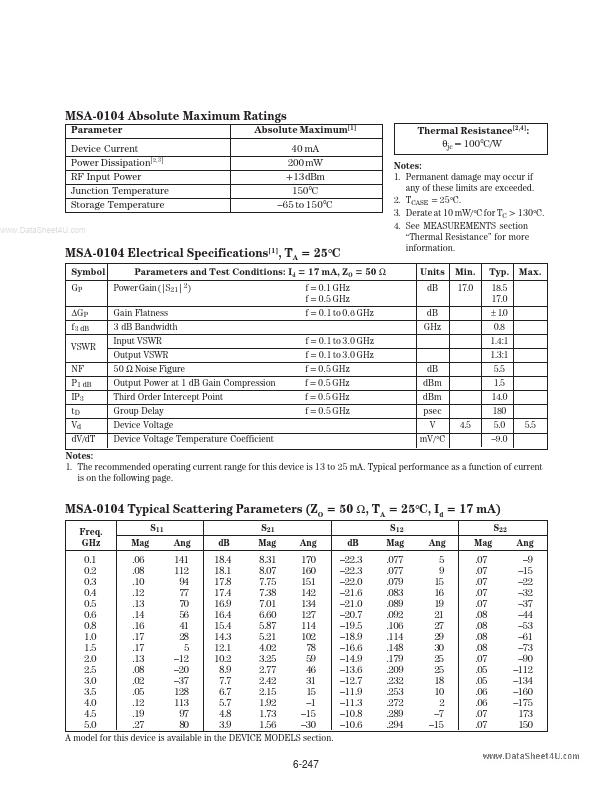
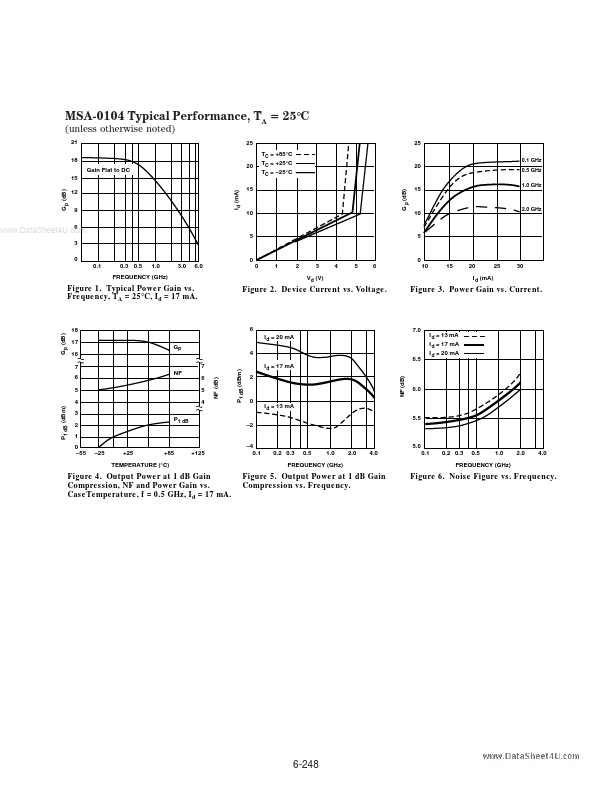
Download the MSA0104 datasheet PDF. This datasheet also covers the MSA-0104_Hewlett variant, as both devices belong to the same cascadable silicon bipolar mmic amplifier family and are provided as variant models within a single manufacturer datasheet.
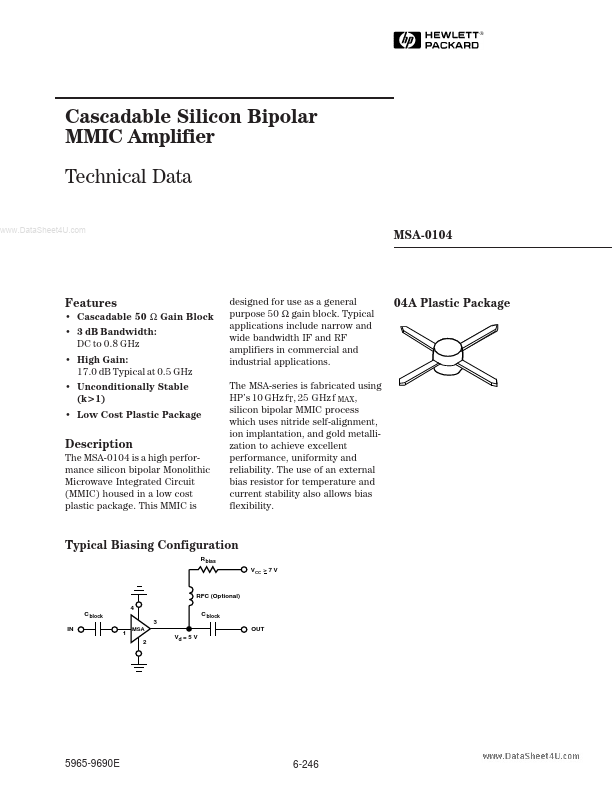
The MSA-0104 is a high performance silicon bipolar Monolithic Microwave Integrated Circuit (MMIC) housed in a low cost plastic package.
| Part number | MSA0104 |
|---|---|
| Manufacturer | Hewlett-Packard |
| File Size | 80.63 KB |
| Description | Cascadable Silicon Bipolar MMIC Amplifier |
| Datasheet |
MSA0104 Datasheet
|
|
|
|
| Part Number | Description | Manufacturer |
|---|---|---|
| MSA0185 | Cascadable Silicon Bipolar MMIC Amplifier | HP |
| MSA0285 | Cascadable Silicon Bipolar MMIC Amplifier | HP |
| MSA0385 | Cascadable Silicon Bipolar MMIC Amplifier | HP |
| MSA0485 | Cascadable Silicon Bipolar MMIC Amplifier | HP |
| MSA0505D-3W | (MSA Series) DUAL/SINGLE OUTPUT DIP DC-DC CONVERTER | MORNSUN |
| Part Number | Description |
|---|---|
| MSA0885 | Cascadable Silicon Bipolar MMIC Amplifier |
| MSA0986 | Cascadable Silicon Bipolar MMIC Amplifier |
| MSA-0100 | Cascadable Silicon Bipolar MMIC Amplifier |
| MSA-0104 | Cascadable Silicon Bipolar MMIC Amplifier |
| MSA-0135 | Cascadable Silicon Bipolar MMIC Amplifier |
The following content is an automatically extracted verbatim text from the original manufacturer datasheet and is provided for reference purposes only.