
Datasheet4U Logo Datasheet4U.com

CY7C1518KV18 - 72-Mbit DDR-II SRAM Two-Word Burst Architecture

Features

  • 72-Mbit density (4M × 18, 2M × 36).
  • 333 MHz clock for high bandwidth.
  • Two-word burst for reducing address bus frequency.
  • Double data rate (DDR) interfaces (data transferred at 666 MHz) at 333 MHz.
  • Two input clocks (K and K) for precise DDR timing.
  • SRAM uses rising edges only.
  • Two input clocks for output data (C and C) to minimize clock skew and flight time mismatches.
  • Echo clocks (CQ and CQ) simplify data capture in high speed systems.
  • Synchronous in.

📥 Download Datasheet

Full PDF Text Transcription (Reference)

The following content is an automatically extracted verbatim text from the original manufacturer datasheet and is provided for reference purposes only.

View original datasheet text
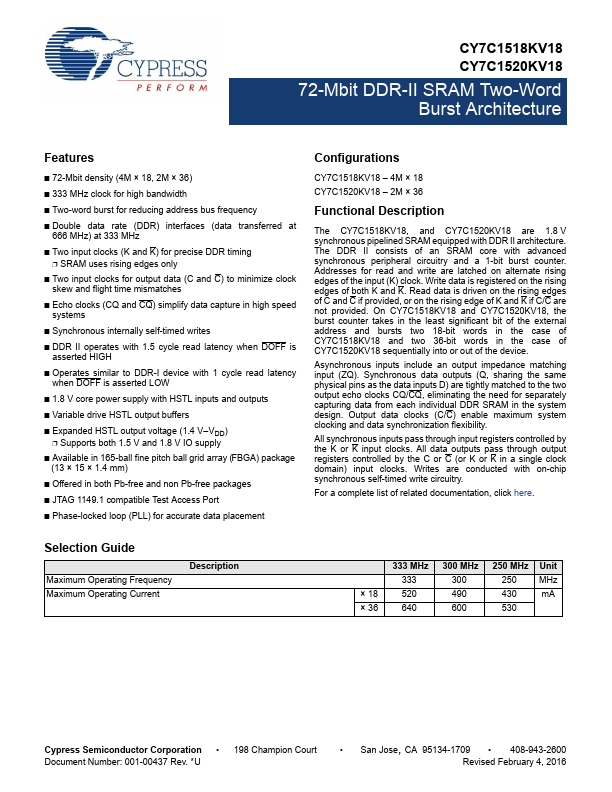
CY7C1518KV18 CY7C1520KV18 72-Mbit DDR-II SRAM Two-Word Burst Architecture 72-Mbit DDR-II SRAM Two-Word Burst Architecture Features ■ 72-Mbit density (4M × 18, 2M × 36) ■ 333 MHz clock for high bandwidth ■ Two-word burst for reducing address bus frequency ■ Double data rate (DDR) interfaces (data transferred at 666 MHz) at 333 MHz ■ Two input clocks (K and K) for precise DDR timing ❐ SRAM uses rising edges only ■ Two input clocks for output data (C and C) to minimize clock skew and flight time mismatches ■ Echo clocks (CQ and CQ) simplify data capture in high speed systems ■ Synchronous internally self-timed writes ■ DDR II operates with 1.5 cycle read latency when DOFF is asserted HIGH ■ Operates similar to DDR-I device with 1 cycle read latency when DOFF is asserted LOW ■ 1.
Published: |